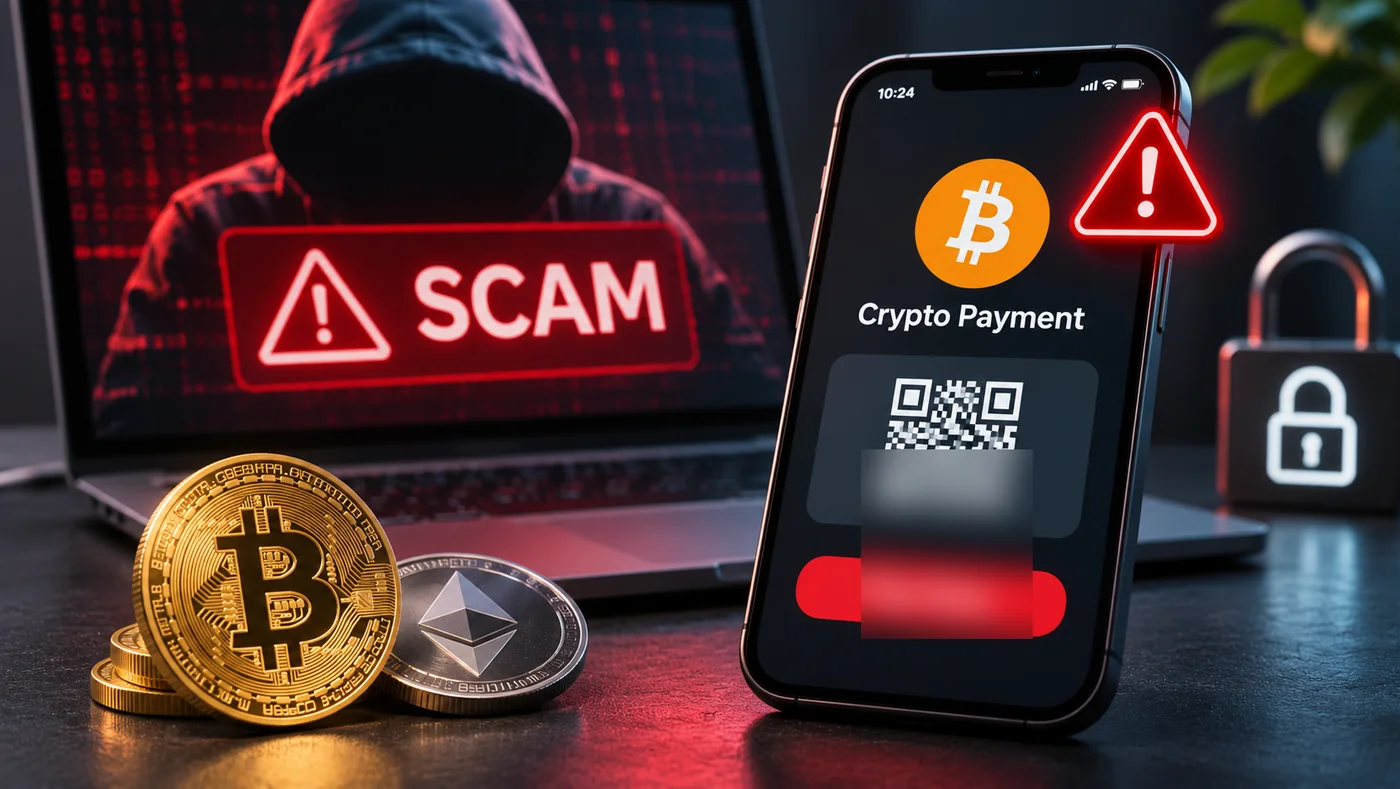
Be suspicious of unexpected demands for cryptocurrency, guaranteed profits, requests for recovery phrases and advance fees to release funds. Verify the request independently; if you already paid, stop further transfers and preserve evidence.
Start with the payment request
Be cautious if someone insists on cryptocurrency to unlock a prize, fix an account or resolve a supposed government problem. The FTC warns about impersonation and investment scams involving digital assets. A real service should have verifiable contact details and transparent payment terms. Do not use links supplied by an unexpected caller or message.
Fake wallet support
Fraudsters may ask for a recovery phrase, private key, one-time code or remote access to your device. These details can give control of funds or accounts. Never share wallet recovery credentials with someone claiming to be support. Use the official app or a bookmarked website and independently verify the domain.
Investment pressure and recovery fraud
Guaranteed high returns, pressure to act quickly and screenshots of supposed profits are not proof of a legitimate investment. A fake platform may show a balance but demand more money before withdrawal. Someone promising to recover lost funds for an upfront fee can be another scam. Do not send additional payments just to test whether the promise is real.
If you already sent funds
Stop further transfers, preserve screenshots, transaction hashes and account details, and contact the platform through verified channels. If bank or card details are exposed, contact your issuer promptly. Report the event to the appropriate local fraud authority; the FTC provides reporting resources for US consumers. Blockchain transactions may be difficult to reverse, so no legitimate responder should guarantee recovery.
Build a safer routine
Use unique passwords and strong account authentication. Check recipient addresses independently and verify the network before sending. Keep recovery phrases offline in a secure location. For ordinary purchases, consider payment methods with appropriate dispute rights. The aim is to reduce avoidable risk, not to assume that any payment technology is perfectly safe.
A common impersonation scenario
A message claims to be from your exchange and says your account will be frozen unless you transfer funds to a “safe wallet.” Do not click its link, install remote-access software or approve a wallet request. Open the service using an address you independently know and check alerts inside your account. A familiar brand name or logo is not evidence of authenticity.
A second scam can follow the first
After an initial loss, someone may claim to be an investigator or recovery specialist and demand an advance fee. They may know details about the original incident. Do not send money based on this promise. Contact your provider and local authorities independently, preserve messages and transaction references, and be cautious about public posts that reveal sensitive account details.
What to preserve when reporting
Record the time, amount, asset, network, public transaction reference and relevant messages. Do not include a recovery phrase, private key or password in a report. If a bank account or card is involved, contact the issuer separately. US readers can use the FTC reporting service; elsewhere, seek the appropriate local authority. No reporting channel can guarantee recovery of blockchain transfers.
Read next
Sources & methodology
Editorial desk research, November 26, 2026. Official documentation and regulator guidance were consulted; product access, fees and terms can change. Examples are illustrative calculations, not live quotes. No hands-on product testing or independent professional certification is claimed. US regulatory sources apply to US rules only.