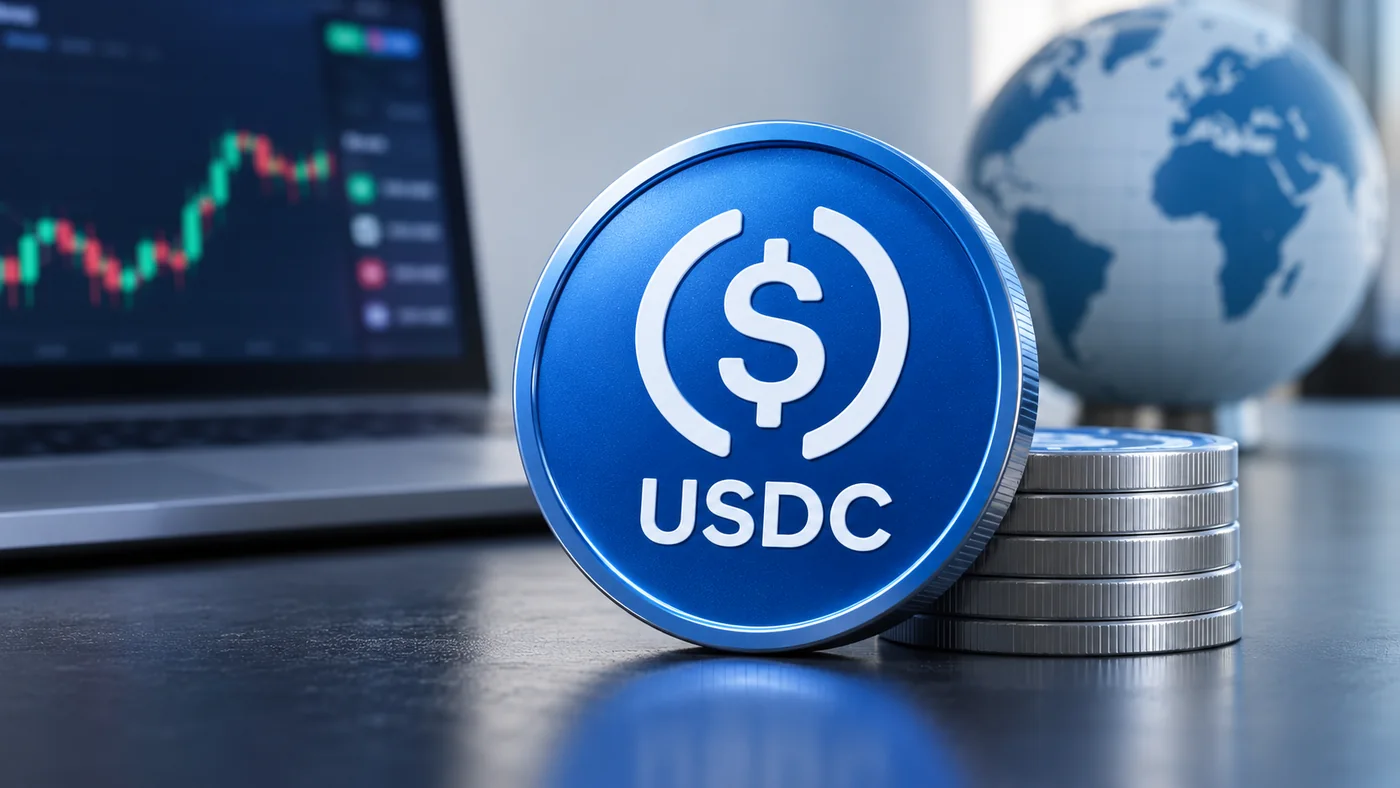
USDC is a digital token designed to track the US dollar. Circle publishes reserve information, but a dollar peg is not a guarantee of unrestricted redemption, a fixed exchange price or deposit insurance.
What the dollar peg means
USDC is a digital token designed to track the US dollar. Circle publishes information about reserves backing the token. A target value of one dollar does not guarantee that every exchange will quote exactly one dollar or that every holder can redeem directly at any moment. Exchange prices can deviate due to market conditions and liquidity.
Reserves and redemption are different questions
Reserve disclosure helps readers understand the assets backing issuance. Direct redemption with the issuer is subject to the applicable account and legal conditions. Many retail users instead sell through an exchange or another intermediary, where spreads, limits and fees may apply. Read the terms for the exact entity and service you use.
Blockchains and wallet addresses
USDC can exist on multiple supported networks. A token with the same displayed name on an unsupported network may not be recognized by your recipient. Confirm the network, token contract when relevant, and deposit requirements. A small test transfer can help check a new address, but it does not eliminate the risk of irreversible loss or future service changes.
Costs and risks
An illustrative 100 USDC transfer that costs 2 USDC and has a further 1% conversion charge on the remainder would produce value of about $97.02 if the token trades at $1. Fees are hypothetical. Real risks include custody failures, smart-contract vulnerabilities, restricted access, price deviations and regulatory changes. Stablecoins are not automatically covered by bank deposit insurance.
Before using a stablecoin for payments
Check whether the recipient can use or convert the token lawfully, who pays the network fee and how refunds are handled. Retain records of the transaction and local-currency value. US users should consult IRS digital asset guidance; others should check local rules. A stablecoin can be a payment tool without being a risk-free savings product.
How issuance differs from secondary-market trading
Eligible Circle Mint customers can create or redeem USDC under the applicable terms. Retail users may acquire or sell tokens through a separate exchange, where liquidity, spreads and fees affect the price. Circle describes reserves that include cash and assets held through a government money market fund. Read current reserve reports and the legal terms for the relevant issuing entity; a reserve report does not establish that every intermediary is solvent.
Native tokens, network support and custody
Before receiving a stablecoin, confirm the exact network and token supported by the recipient. A wallet can display a similar symbol for a different asset. Native and bridged representations may have different risks or deposit support. If an exchange controls your keys, access depends partly on that service; self-custody instead places responsibility for keys and transaction approval on you. Neither arrangement guarantees recovery after a mistake.
What a price deviation means for a payment
If 100 USDC trades at $0.98, its gross market value is $98 rather than $100. A further 1% selling fee leaves $97.02, before other charges. This hypothetical example shows why a stablecoin’s name is not a complete cost estimate. If a supplier needs a fixed local-currency amount, agree on the settlement amount, exchange rate, who pays fees and the refund process before transferring.
Read next
Sources & methodology
Editorial desk research, November 26, 2026. Official documentation and regulator guidance were consulted; product access, fees and terms can change. Examples are illustrative calculations, not live quotes. No hands-on product testing or independent professional certification is claimed. US regulatory sources apply to US rules only.